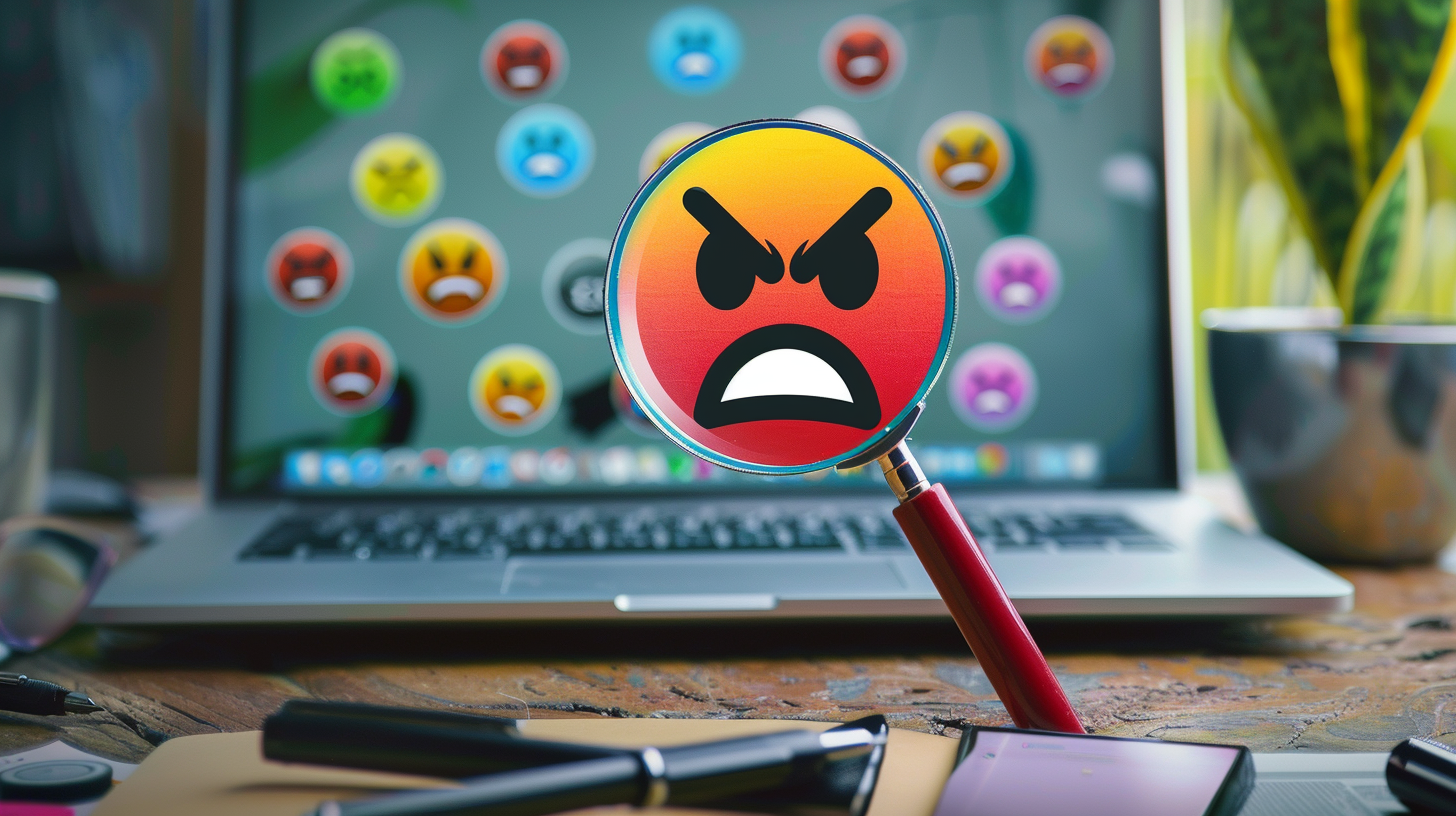
User opinions can be formed instantly, and sometimes even a single negative opinion can significantly affect a company’s reputation. That is why monitoring networks for negativity has become an integral part of marketing strategy.
Why is monitoring networks for negativity necessary?
The main reason companies pay attention to monitoring negative reviews is to protect their reputation. A single negative comment can spread at incredible speed, especially if it concerns serious issues such as product quality or customer service.
Timely detection of negative mentions allows a company to quickly respond to emerging problems. This can not only prevent further spread of negativity, but also demonstrate the company’s loyalty.
Negative reviews can serve as a valuable source of information about shortcomings in products or services. By analyzing criticism, a company can identify weak points and take steps to address them, thereby improving its offerings.
Monitoring is not limited to your own mentions. Studying negative reviews about competitors allows you to learn from their mistakes and improve your own offerings.
Typical scenarios where monitoring networks for negativity is used
Now almost every government agency or governor has their own social media account.
Naturally, their PR or SMM specialists are interested in learning about negative comments in their accounts as quickly as possible, as well as about people’s sentiments on certain topics.
When a business launches new products/services on the market, or even just advertises its regular offerings, it is of course interested in engaging in dialogue with customers who may be dissatisfied.
How to monitor social media for negativity?
Of course, all such tasks can be solved manually) That is, by receiving built-in notifications from social networks — and responding to them.
But here two problems arise:
1) A huge number of notifications: in any active account, especially where sensitive topics are discussed — which is exactly where negativity needs to be monitored — there can be more than a hundred comments a day.
Seeing such a number of notifications and processing them all is hardly realistic.
Moreover, employees responsible for this also have other tasks, lunches, and so on — which reduces the speed of response.
But believe us, when some kind of “battle” unfolds in your comments with mentions of undesirable characters or events — you are primarily interested in finding all this, processing it, responding, or finally — deleting it.
And here Chotam — a service for instant monitoring of comments on social networks comes to the rescue:
- Forwards them to email or Telegram to responsible persons,
- Allows you to quickly respond to them or delete them, including automatically — by certain keywords or by time.
- Exports data for further analysis in Excel.
Tips
- Quick response. It is important to respond promptly to negative comments. Apologies, clarifications, and proposed solutions should follow as quickly as possible.
- Public and private communication. Some problems can be solved publicly, demonstrating to other users that the company cares about its customers. However, complex or personal issues are better discussed in private messages.
- Analysis and reports. Regularly analyze the collected data and prepare reports. This will help identify recurring problems and make strategic decisions to address them.
- Employee training. Train your team to respond correctly to negative comments. Developing scenarios and scripts will help standardize responses and make them more professional.
- Use specialized tools. Our service Chotam was specially developed for these purposes.
Monitoring networks for negativity is an integral part of modern marketing strategy. It helps protect a company’s reputation, promptly solve emerging problems, improve products and services, and also gain a competitive advantage.
Leave a Reply